
How Are Motorcycle Helmets Tested and Certified for Real-World Safety?
Helmet certification is a safety standard system that defines how much protection a helmet must provide before it is legally or commercially allowed to be sold. This means the helmet is judged based on how well it manages impact energy during a crash.
Helmet Testing and Certification is not done by the brands themselves but is carried out by government-approved labs or independent, accredited testing bodies.
Let’s explore how that testing is done, who handles it and what it means for you as a rider?
How Motorcycle Helmet Testing Is Done?
Motorcycle helmets are tested and certified through a structured process designed to ensure they can protect a rider’s head during a crash. While the exact procedure varies by country and certification system, the underlying goal is the same: to verify that a helmet can absorb impact energy, resist penetration, stay securely on the rider’s head, and provide adequate coverage and vision.
Here are the general tests that a helmet undergoes during certification:
Testing type | How it works? | Acceptable numbers |
Impact absorption | Helmet is mounted on a standardized headform and dropped onto flat, hemispherical, or angled anvils to measure the force transmitted to the head | Maximum peak acceleration limit defined by the standard. Example: DOT allows up to ~400 g, ECE R22.05 ~275 g, ECE R22.06 is stricter with lower thresholds |
Penetration resistance | A sharp, weighted striker is dropped onto the helmet shell to check whether it pierces through to the headform | Striker must not contact the headform under specified drop height and weight |
Retention system strength | Heavy loads are applied to the chin strap and buckle to test stretching, slippage, or breakage | Strap must not break and elongation must remain within specified limits of the standard |
Field of vision | The helmet’s eye port is measured to ensure adequate peripheral visibility for the rider | Minimum horizontal field of view, typically around 105 degrees on each side |
Chin bar strength (full-face helmets) | Force is applied to the chin bar area to evaluate deformation and protection in frontal impacts | Deformation must remain within defined limits and must not contact the face or headform |
Rotational or oblique impact | The helmet is struck at an angle to measure rotational acceleration transferred to the headform | Rotational acceleration must stay below limits defined in newer standards such as ECE R22.06 |
Shell rigidity and construction | The helmet shell is inspected and stressed to ensure structural integrity and uniform thickness | No cracking or structural failure beyond permitted limits |
Ongoing compliance checks | Factory audits and random market sampling ensure mass-produced helmets match tested samples | All sampled helmets must continue to meet the same pass criteria as certified samples |
A Certification mark indicates that the helmet meets at least the minimum safety requirements defined by the certifying authority.
Who Tests Helmets In India?
ISI (India)
Indian Standards Institution or ISI is a BIS-approved laboratory under the Bureau of Indian Standards (BIS) controlled by the Government of India.
Under this process, the manufacturer submits helmet samples to BIS-approved laboratories, where they are tested according to the IS 4151 standard.
In addition to laboratory testing, factory audits are carried out to ensure consistent production quality, and periodic market sampling is conducted to verify that helmets being sold continue to meet the prescribed safety requirements.
What Does it Mean to Buy an ISI Certified Helmet in India?
An ISI-certified helmet means it is legal to use in India and complies with the minimum safety requirements under IS 4151 set by the Government of India.
It has passed basic safety tests such as impact absorption, penetration resistance, and chin-strap strength through BIS-approved labs.
ISI certification offers baseline protection only and does not include advanced crash testing, so it is best treated as a minimum standard rather than high safety assurance.
DOT (USA)
The Department of Transportation (DOT) follows the Federal Motor Vehicle Safety Standard (FMVSS) 218, under which helmet manufacturers are required to self-certify their products and affix DOT stickers before the helmets are sold in the market.
Unlike pre-approval systems, these helmets are released to consumers prior to official testing.
The governing authority then purchases helmets directly from the market and conducts evaluations in independent laboratories.
If any helmet is found to fall short of the required safety standards, the manufacturer is subject to heavy penalties.
Regulating Body: National Highway Traffic Safety Administration (NHTSA)
What Does it Mean to Buy a DOT Certified Helmet in India?
DOT certification ensures basic impact, penetration, strap strength, and vision requirements, but it does not test rotational impacts and allows relatively high force levels, so it represents a minimum safety benchmark, not advanced protection.
SNELL Memorial Foundation (SNELL):
SNELL certification is a voluntary, high-performance helmet safety standard primarily focused on racing and high-speed impacts, rather than everyday street riding.
SNELL standards are developed and enforced by the Snell Memorial Foundation, an independent, non-profit organization based in the USA.
SNELL testing is intentionally very strict. Helmets are subjected to high-energy impact tests, where the same spot on the helmet can be hit multiple times to simulate severe crashes. Penetration resistance is also tested using a sharp striker, and chin straps are tested under heavy loads to ensure they do not fail.
SNELL prioritises maximum protection in extreme impacts, which is why many SNELL-approved helmets use stiffer shells and denser EPS liners. This makes them excellent for track use, racing, and very high-speed crashes.
What Does It Mean to Buy a SNELL Certified Helmet?
A SNELL-certified helmet has passed extremely strict, race-focused safety tests that go well beyond the minimum legal requirements in most countries.
It is designed for high-speed impacts, making it ideal for racing, track days, and aggressive riding, but often unnecessary for everyday commuting or casual street use.
SNELL certification is not legally required for road use, yet SNELL-approved helmets remain highly trusted by professional racers and serious enthusiasts who prioritise maximum protection.
Safety Helmet Assessment and Rating Program (SHARP)
The Safety Helmet Assessment and Rating Programme (SHARP) is a government-backed helmet rating system developed by the UK Department for Transport to help riders understand how safe a helmet is in real-world crashes.
Unlike ISI, DOT, ECE, or SNELL, SHARP is not a certification. It does not decide whether a helmet can be legally sold. Instead, it compares and rates helmets that are already ECE certified.
How SHARP Works?
SHARP independently buys helmets from retail, tests multiple impact points beyond minimum ECE requirements, and weights them based on real-world crash likelihood.
Test results are combined into a 1 to 5-star rating, with higher stars indicating better impact absorption and everyday road protection.
SHARP helps riders compare safety performance between ECE-certified helmets, showing how good a helmet is rather than whether it is legal to use.
Economic Commission of Europe (ECE)
The Economic Commission for Europe (ECE) helmet certification is one of the most trusted and widely accepted motorcycle helmet safety systems in the world.
It is governed by the United Nations Economic Commission for Europe (UNECE) and applies to helmets sold across Europe and many other countries that recognize ECE standards.
How ECE Certification Works?
ECE follows a type-approval system, where helmets must be tested and approved by independent, government-accredited labs before they can be sold.
Helmets are tested under ECE R22.05 or the stricter R22.06, covering impact absorption, penetration resistance, strap strength, vision, chin bar strength, and in R22.06, rotational and oblique impacts with lower force limits.
ECE also enforces ongoing factory audits and post-market checks, and approved helmets carry an ECE mark confirming internationally accepted safety compliance.
How to Check If Your Helmet is Certified?
To check if your helmet is certified, start by looking for a clearly visible certification mark such as ISI, DOT, ECE, SNELL, or SHARP on the helmet or its inner lining. Next, verify the approval code, for example, IS 4151 for ISI helmets or ECE 22.05 or 22.06 for ECE-certified helmets. Carefully inspect the markings for signs of tampering, as fake helmets often have blurry printing, incorrect placement, or misspelt labels. Finally, genuine certified helmets usually come with proper documentation, including a user manual and certification details provided by the manufacturer.
How to Choose a Helmet Considering Its Certifications?
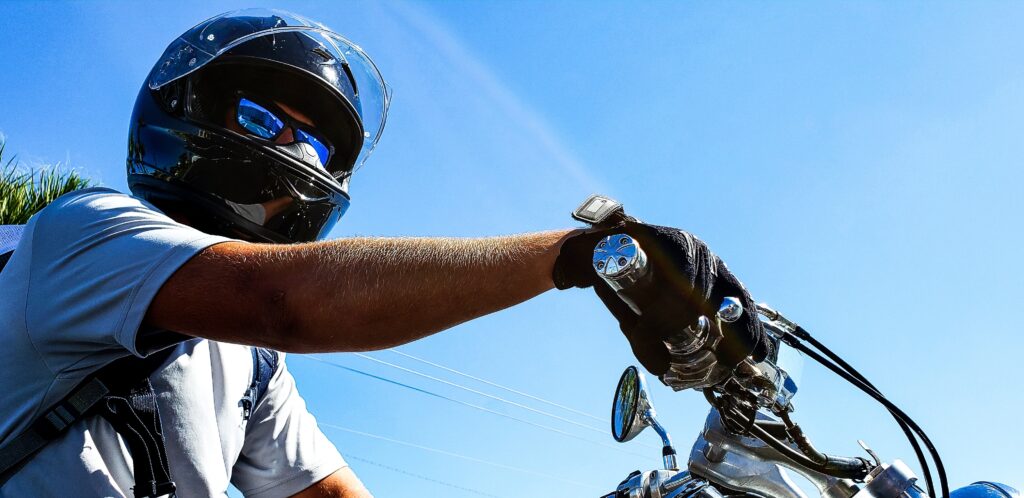
Choosing a helmet based on certification should be a practical decision tied to how you ride, where you ride, and legal requirements, not just the number of stickers on the shell.
Start by treating certification as a minimum safety filter.
Any helmet you consider should at least meet the legal standard in your country. In India, this means the helmet must be ISI certified. Without ISI, the helmet is illegal to use on public roads, regardless of how good it may look or feel.
Next, match the certification level to your riding conditions. For everyday commuting and regular street riding, helmets certified under ECE R22.05 or the newer ECE R22.06 are the most sensible choice because they are tested using more realistic crash scenarios and stricter force limits than ISI or DOT.
If the helmet also carries ISI certification, it gives you both legal compliance and better real-world safety.
If you do a lot of highway riding or touring, prioritize ECE R22.06, as it covers a wider range of impact speeds and includes rotational impact testing, which is more relevant for real-world accidents.
You can also use SHARP ratings to compare helmets that are both ECE certified, since SHARP shows which one performs better in independent impact tests.
For track riding, racing, or very aggressive riding, look for SNELL certification, as these helmets are designed to handle very high-speed impacts and repeated hits. However, for normal road use, SNELL is usually unnecessary and can be excessive.
Avoid choosing a helmet based on certification alone. A higher certification does not help if the helmet does not fit your head properly. A well-fitted ECE-certified helmet is far safer than a poorly fitting helmet with multiple certifications.
In simple terms, use certification to narrow your options, then choose the helmet that fits your head shape, riding style, and budget best.
For most riders in India, the safest and most balanced choice is a helmet with ECE certification along with ISI approval, worn correctly every time you ride.
When evaluating whether you should choose certified helmets, it also helps to know which manufacturers consistently meet these safety standards, making this a good point to explore the best helmet brands trusted by riders.
Explore More Expert Helmet Guides and Insights
Frequently Asked Questions (FAQs) Around Helmet Certifications
Helmet certification means the helmet has passed defined safety tests set by a regulatory or independent authority and meets minimum protection standards.
Yes, wearing an ISI-certified helmet is legally mandatory for riding a two-wheeler on public roads in India.
Yes, ECE certification is generally more rigorous and realistic than ISI or DOT, especially the newer ECE R22.06 standard.
Yes, many helmets carry multiple certifications such as ISI and ECE, which ensures both legal compliance and improved safety performance.
DOT certification meets basic safety requirements, but it allows higher impact forces and does not test rotational impacts, making it less advanced than ECE.
ECE 22.06 is a newer and stricter standard that includes rotational impact testing and more real-world crash simulations.
SNELL certification is a race-focused safety standard designed for high-speed impacts and is best suited for track riders and racers.
SHARP is a rating system that compares the safety performance of ECE-certified helmets and does not determine legal compliance.
You can check for clear certification marks, verify approval codes, inspect for tampering, and review manufacturer documentation.
For daily riding in India, a helmet with ECE certification along with ISI approval offers the best balance of safety and legal compliance.