
How to Clean and Maintain Your Helmet for Longevity
A motorcycle helmet that smells of sweat does more than just feel unpleasant. It can affect your comfort, concentration, and even your health during long rides. While modern helmets are designed to be durable, skipping regular cleaning allows sweat, dust, and grime to seep deep into the padding. Once these odors settle in, heat and humidity only make them worse, turning every long ride into an uncomfortable experience.
Your helmet is constantly exposed to sweat, pollution, and changing weather, all of which slowly degrade its materials over time. Proper cleaning and maintenance keep the helmet hygienic, preserve its protective components, and ensure it performs as intended. In simple terms, a neglected, smelly helmet is not just an inconvenience. It directly impacts comfort, focus, and safety, especially when you are wearing it for hours on end.
This guide explains how to clean a motorcycle helmet the right way, which parts need regular attention, and the common mistakes you should avoid to extend your helmet’s lifespan.
How to Properly Clean a Motorcycle Helmet?
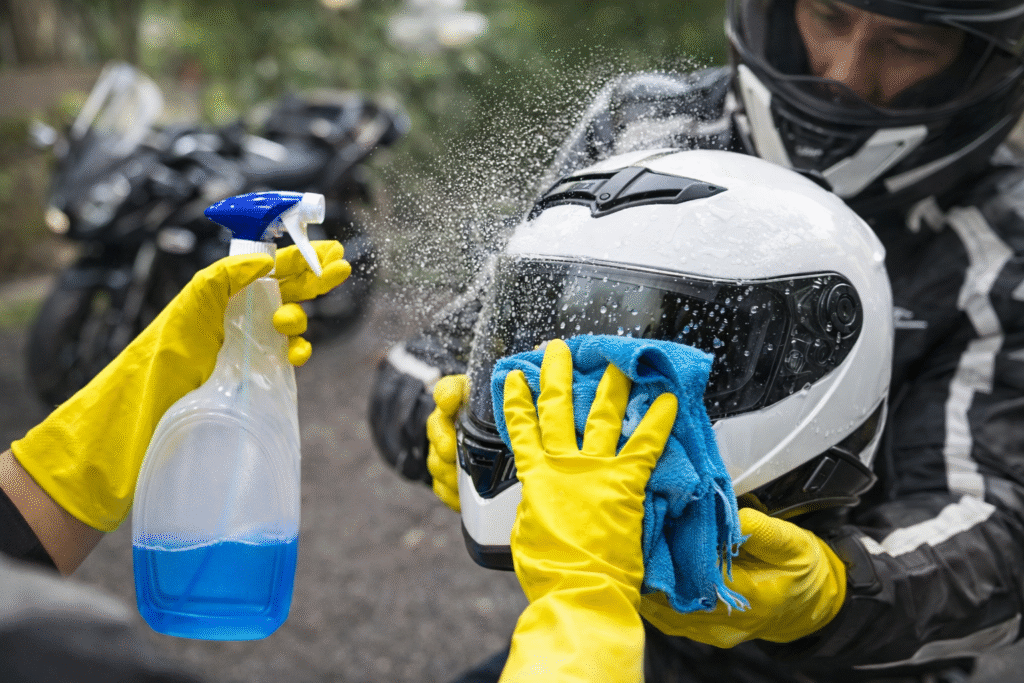
Before starting, remove all detachable parts such as liners, cheek pads, and visor. Always clean your helmet gently. Harsh methods can damage padding, coatings, and the shell.
Use lukewarm water, mild soap or baby shampoo, and a soft microfiber cloth.
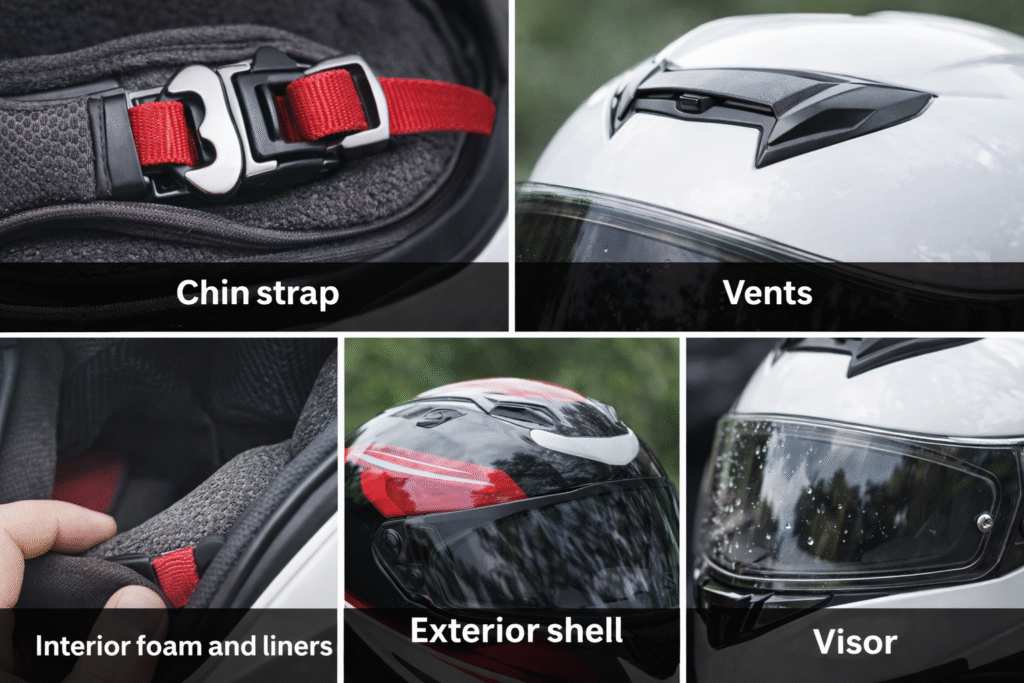
Helmet Components That Need Regular Cleaning
- Chin strap
- Vents
- Interior foam and liners
- Exterior shell
- Visor
Each part needs a slightly different approach.
How to Clean Helmet Chin Strap
The chin strap absorbs sweat and bacteria quickly.
Steps:
- Dip a soft cloth in mild soapy water
- Gently scrub the strap and buckle
- Use a soft toothbrush for stitched areas
- Wipe with a clean damp cloth
- Let it air dry completely
- Avoid soaking the strap for long periods.
How to Clean Helmet Vents
Helmet vents trap dust, insects, and grime.
Steps:
- Use a soft brush or old toothbrush
- Clean with mild soap and water
- Do not insert sharp objects into vents
- Wipe dry with a microfiber cloth
- Blocked vents reduce airflow and comfort.
How to Clean Helmet Interior Foam
If your helmet has removable liners, clean them separately.
Steps:
- Soak liners in mild soapy water
- Gently squeeze, do not twist
- Rinse thoroughly
- Air dry in shade
- If liners are not removable, use a damp cloth and helmet interior cleaner spray.
How to Clean Helmet Exterior Shell
The shell protects against impact and must be handled carefully.
Steps:
- Place a wet cloth on the shell for a few minutes to loosen dirt
- Wipe gently with microfiber cloth
- Use mild soap only if needed
- Dry with a clean towel
- Never use petroleum-based cleaners.
How to Clean Helmet Visor Without Scratches
Visors are sensitive and easily scratched.
Steps:
- Rinse visor with clean water
- Use a soft microfiber cloth
- Clean using mild soap if needed
- Rinse and air dry
- Do not rub a dry visor. Dust particles cause scratches.
How to Clean Helmet Without Damaging Padding
- Always use mild soap
- Avoid scrubbing aggressively
- Never use hot water
- Do not use alcohol or solvents
- Padding loses cushioning ability if mishandled.
How Often Should You Clean Your Helmet
- Daily commuters: light cleaning every week
- Long ride riders: clean after every long ride
- Full deep clean: once every 1 to 2 months
- Sweat and bacteria build up faster in Indian weather.
How to Remove Bad Smell From Helmet Without Washing
- Sprinkle baking soda inside overnight
- Use helmet deodorizer spray
- Leave helmet in a well-ventilated area
- Place activated charcoal pouch inside helmet
- Avoid strong perfumes. They only mask the smell.
How to Clean Helmet After Long Rides
- After long rides, especially in rain or heat:
- Remove liners immediately
- Wipe moisture from shell and visor
- Dry helmet fully before storage
- Clean vents and chin area
- Moisture left inside reduces helmet life.
How to Reduce Sweat Buildup in Helmet
- Use moisture-wicking balaclava
- Keep vents clean and open
- Wash liners regularly
- Avoid wearing helmet immediately after heavy sweating
- Proper airflow reduces odor and discomfort.
How to Disinfect Helmet After a Long Ride
- Use helmet-safe disinfectant sprays:
- Spray lightly on liners and padding
- Let it air dry naturally
- Do not overspray
- Disinfection is useful after monsoon rides and summer touring.
What Not to Use While Cleaning Helmet
- Alcohol or sanitizer
- Petrol or diesel
- Glass cleaners with ammonia
- Hard brushes or scouring pads
- Washing machines for full helmets
- These damage shell integrity and visor coatings.
How to Dry Helmet Liners Quickly?
- Gently press out excess water
- Place liners under a fan
- Dry in shade only
- Do not use hair dryers or direct sunlight.
Can You Wash Helmet Liners in Washing Machine
Only wash helmet liners in a washing machine if the manufacturer clearly states that it is safe to do so. Helmet liners are made from delicate materials, and improper washing can damage the foam, stitching, or sweat-wicking properties.
If machine washing is permitted, follow these precautions strictly:
Use a gentle or delicate cycle to avoid stressing the fabric and seams
Wash with cold water only, as heat can shrink or weaken the padding
Use a mild detergent without bleach or strong chemicals
Disable spin drying, since aggressive spinning can deform the liners
Even when machine washing is allowed, hand washing remains the safest option. It gives you better control, reduces wear and tear, and helps the liners retain their shape, comfort, and longevity.
Also, If you are serious about helmet care, choosing a well built lid matters just as much as maintaining it properly, which is why it is worth exploring the best helmet brands in india that offer durable materials, reliable liners, and long term safety performance.
Explore More Expert Helmet Guides and Insights
Frequently Asked about Helmet Cleaning
Yes. Mild baby shampoo is safe for cleaning helmet liners and the outer shell. Avoid strong or scented shampoos.
Yes, its possible that overwashing with harsh soaps or detergents can reduce padding life. Use mild cleaners and wash only when necessary.
No. Direct sunlight can helmet cushioning and make the helmet padding stiff . Its recommended to always air-dry your helmet in the shade or use a hair blower.
Use a pinlock visor or anti-fog solution and keep vents, visor clean, and slightly open the visor in slow traffic.
Remove the padding from the helmet and allow it to dry naturally using airflow from a fan or blower on a cool setting. Clean the helmet’s exterior with a soft sponge or microfiber cloth. Avoid letting water seep into the padding, EPS liner, or chin strap, as trapped moisture can cause odor and material damage.
After riding in the rain, dry the helmet exterior immediately. Remove any moisture from the vents and padding, place silica gel packets inside the helmet bag to absorb residual dampness, and never store the helmet while it is wet.
Wash liners more frequently, use sweat-wicking headgear, keep the helmet ventilated when not in use, and avoid leaving it inside a parked bike box.